

par Kingfisher Metals Corp. (CVE:KFR)
Kingfisher Confirms Blind Copper-Gold Porphyry Discovery at Hank, HWY 37 Project, Golden Triangle, British Columbia
VANCOUVER, BC / ACCESS Newswire / January 22, 2026 / Kingfisher Metals Corp. (TSXV:KFR)(FSE:970)(OTCQB:KGFMF) ("Kingfisher" or the "Company") is pleased to announce final assay results from the 2025 drilling program at the HWY 37 Project. The 933 km2 HWY 37 Project is located within the Golden Triangle, British Columbia.
Drillhole HW-25-011 confirms discovery of a new copper - gold (Cu-Au) porphyry system below the Hank epithermal gold-silver (Au-Ag) mineralized system. Assays from HW-25-011 returned 425.0 meters1 (m) of 0.40% CuEq2 (0.15% Cu, 0.21 g/t Au and 2.2 g/t Ag) (Figure 1 - 5). This newly identified zone represents a blind discovery, as porphyry Cu-Au mineralization had not previously been recognized or reported at Hank. These results validate Kingfisher's exploration model and demonstrate the potential for the Hank area to host one or more large-scale porphyry Cu-Au systems.
Highlights from this release include:
Discovery of a blind porphyry Cu-Au system with 425.0 m of 0.40% CuEq (Figure 1 - 5).
Potential for a large-tonnage porphyry Cu-Au system nested below the Hank epithermal Au-Ag system (Figure 1 - 5).
Zonation observed in drillhole HW-25-011 progresses from low to higher temperature alteration demonstrating a vector towards a porphyry heat source to the southeast. This is indicated by:
Increasing Cu:Au ratios downhole toward the southeast (Figure 4)
Sulfide mineralogy (see summary and discussion below)
Alteration and vein zonation (see summary and discussion below)
2026 Target Area to be drill tested, approximately 1.75 km x 0.95 km (Figure 2 - 5), defined by geophysical, geological and exploration inputs3.
Mineralization remains open in all directions, with the drill hole terminating in increasing copper grades at 959.0 m depth (Figure 3).
Induced polarization (IP) surveys lines north and south of HW-25-011 outline broad areas of chargeability possibly indicating the presence of a large, disseminated sulfide body (Figure 4).
Dustin Perry, CEO of Kingfisher, states, "The final hole of the 2025 program validates our long-standing belief that the shallow Hank Au-Ag epithermal mineralization is driven by a large porphyry Cu-Au system. This impressive first intercept of 425.0 metres of 0.40% CuEq is interpreted to be on the margin of the system, with anticipated increases in grade toward the conceptual core. The scale and consistency of this discovery, along with a wide untested area hosting strong geophysical anomalies, highlight the potential for further exploration and support the need for aggressive follow-up drilling in 2026."
Table 1. Drill Results from this Release.
Hole No. | From (m) | To (m) | Interval (m)1 | Cu (%) | Au (g/t) | Ag (g/t) | CuEq (%)2 | AuEq (g/t)2 |
|---|---|---|---|---|---|---|---|---|
HW-25-011 | 281.0 | 293.0 | 12.0 | 0.02 | 1.18 | 1.6 | - | 1.22 |
Incl. | 284.85 | 286.45 | 1.6 | 0.01 | 6.95 | 3.5 | - | 6.99 |
and | 357.0 | 362.4 | 5.4 | 0.01 | 0.94 | 1.5 | - | 0.97 |
and | 468.0 | 497.0 | 29.0 | 0.01 | 0.27 | 2.1 | - | 0.30 |
and | 534.0 | 959.0 | 425.0 | 0.15 | 0.21 | 2.2 | 0.40 | 0.37 |
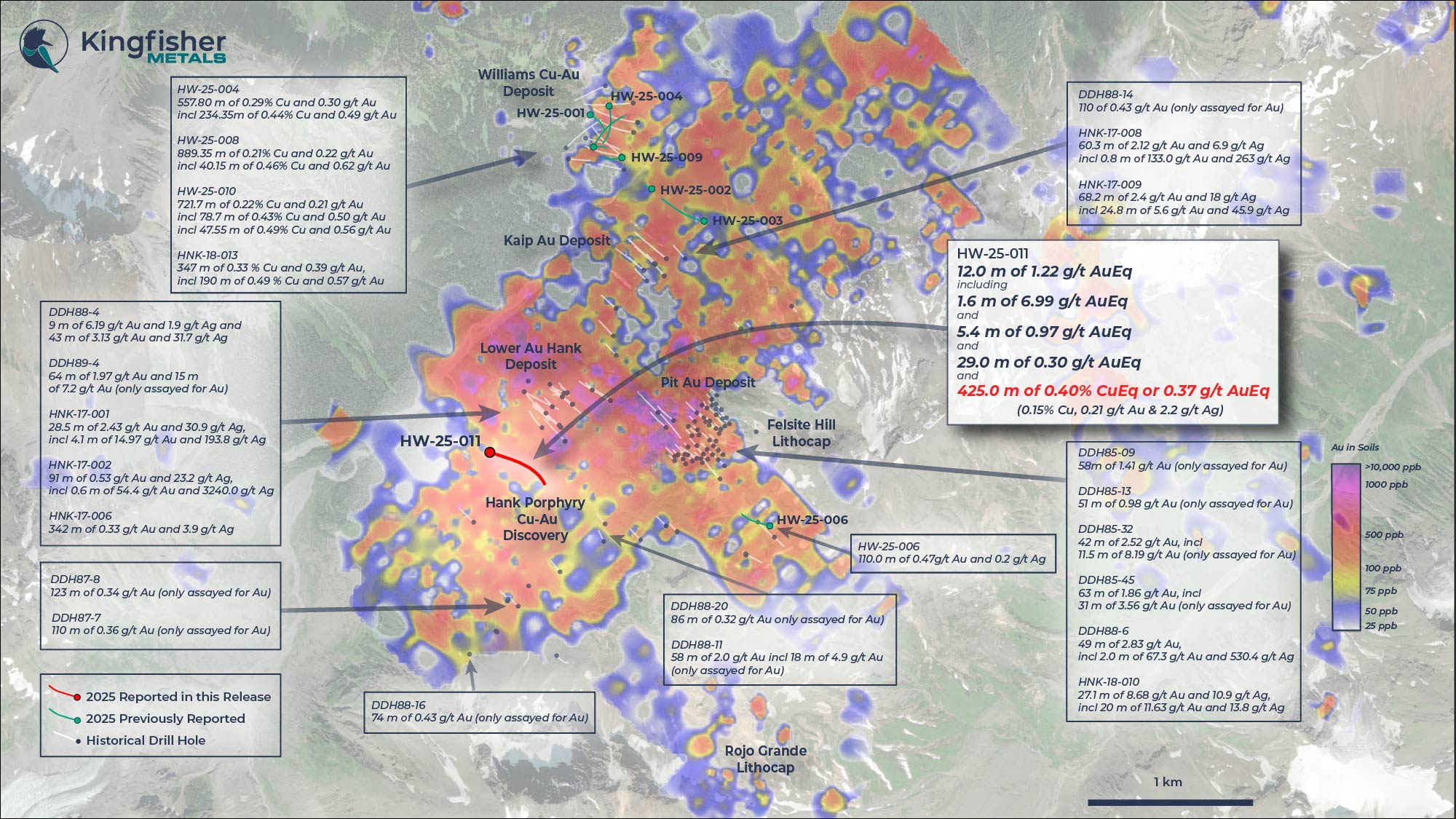
Figure 1: Plan View Historical and 2025 Drillhole Locations
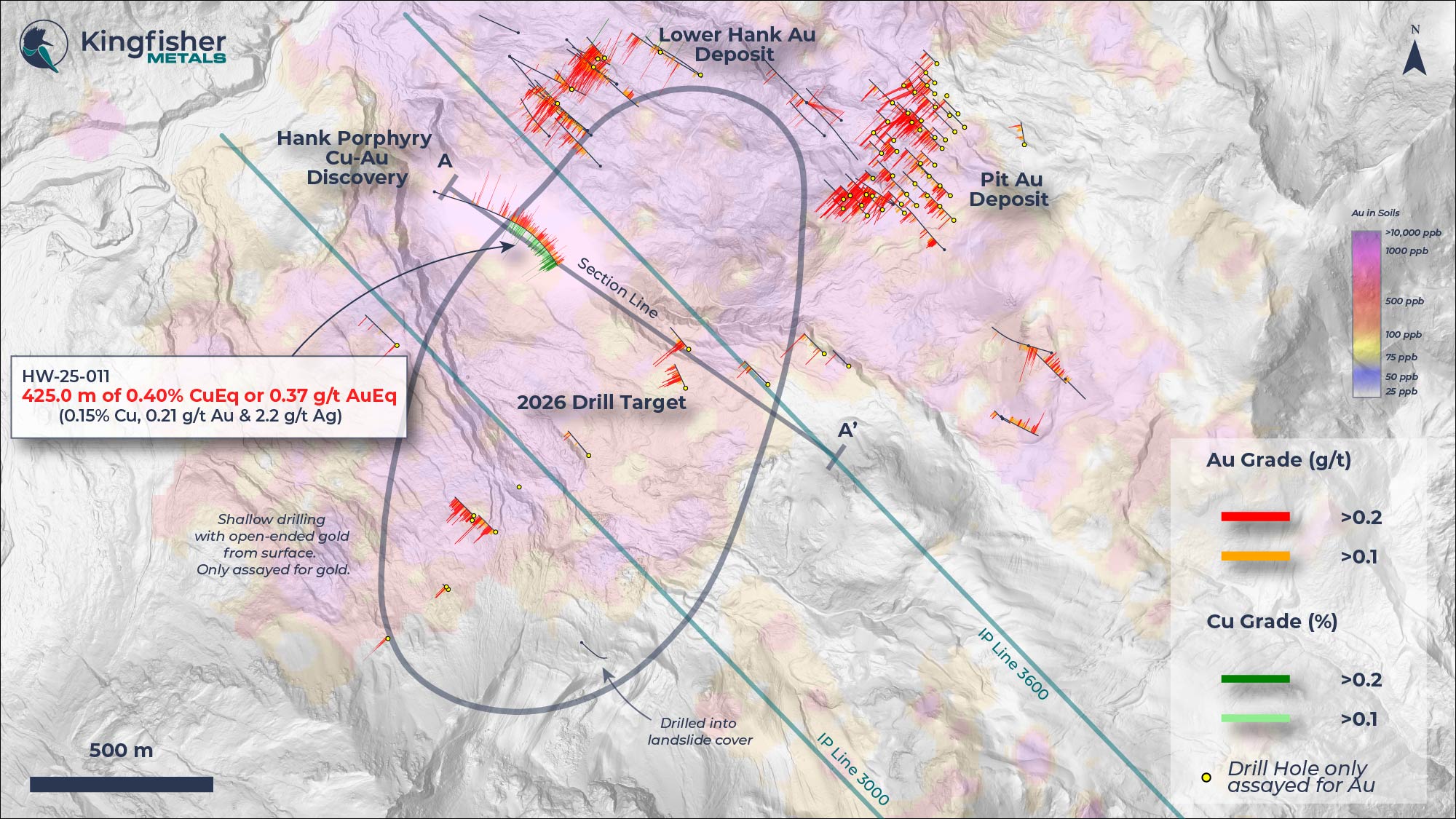
Figure 2: Plan view of HW-25-011 relative to historical drilling and section lines.
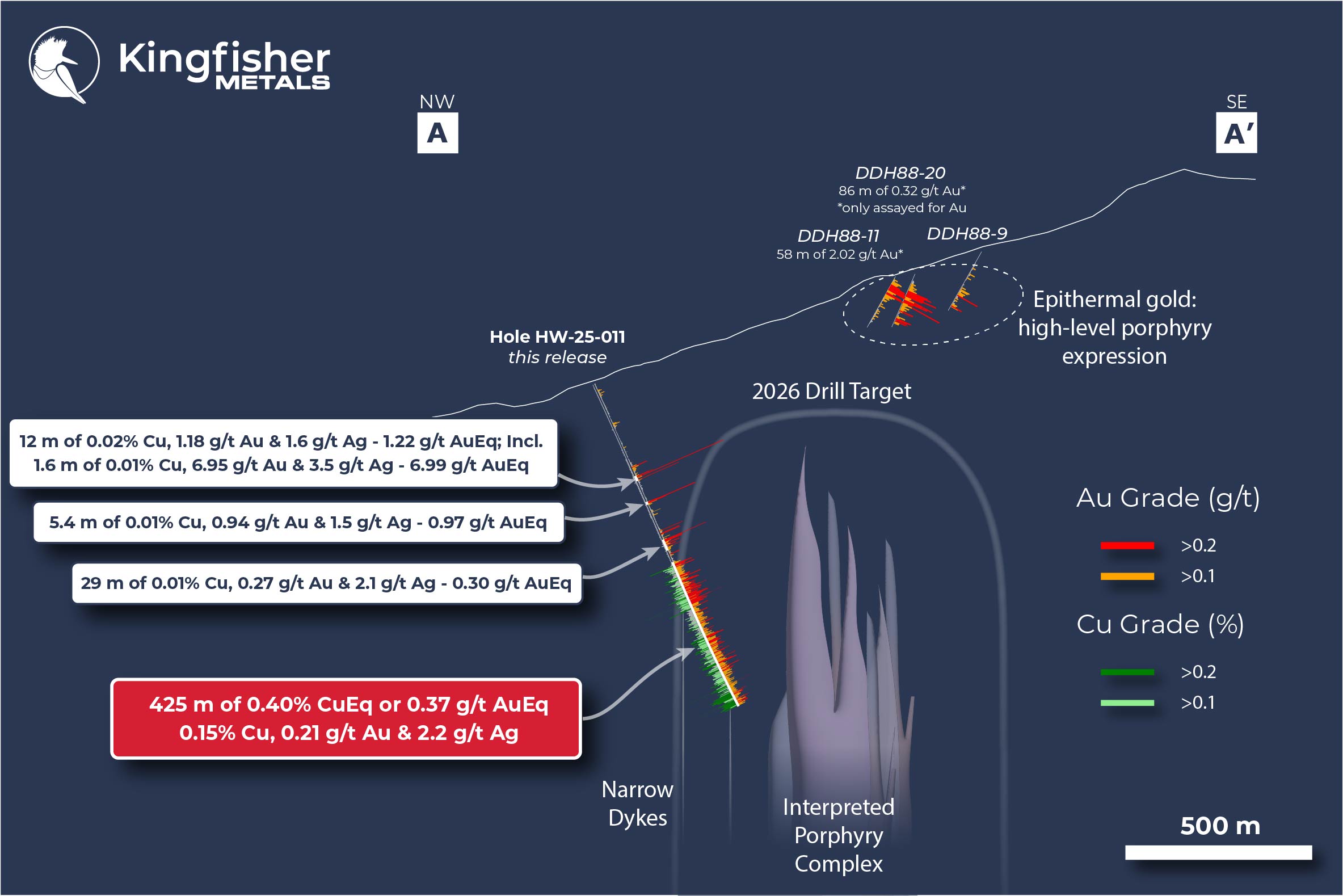
Figure 3: Interpreted Cross Section HW-25-011
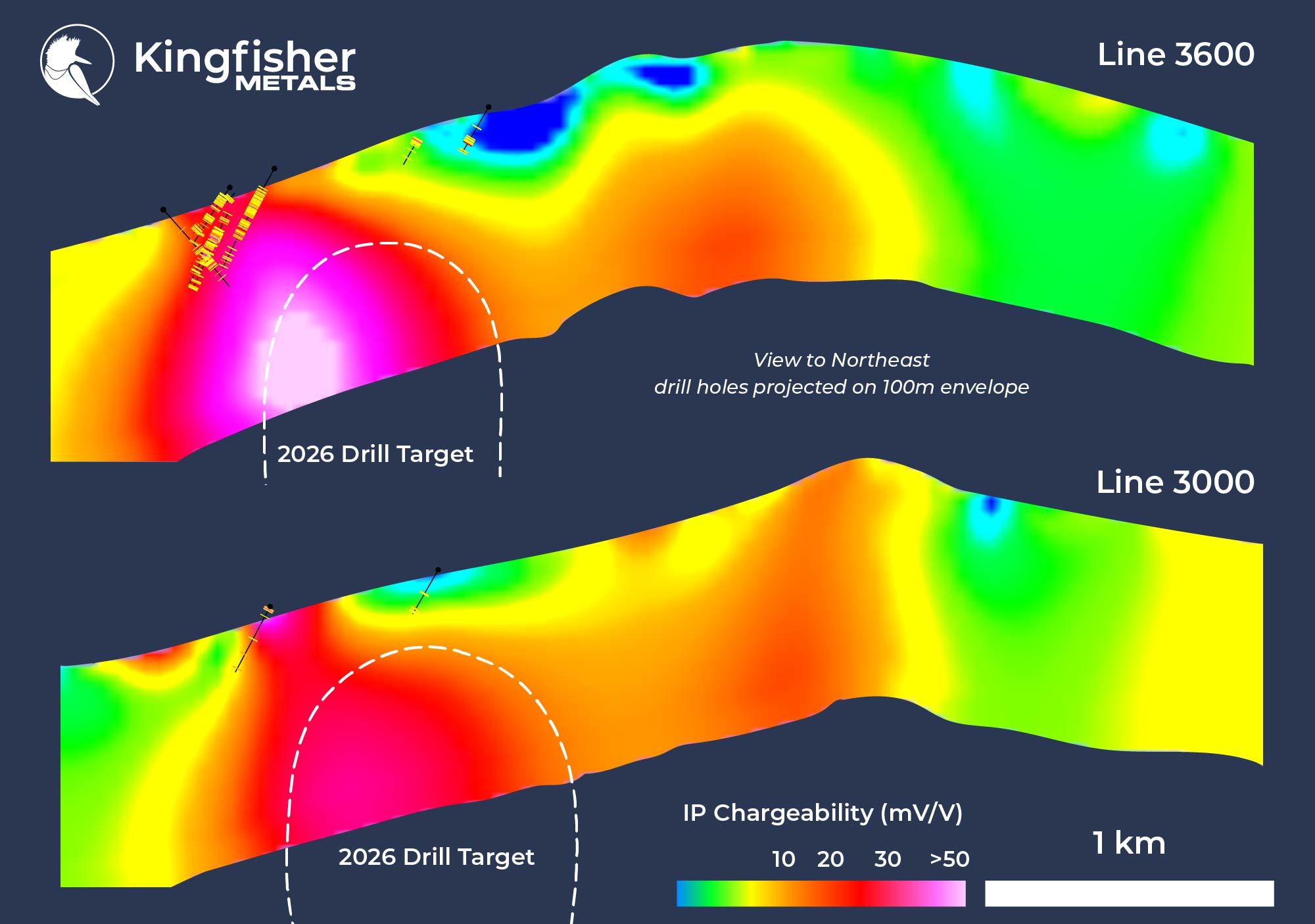
Figure 4: IP Sections
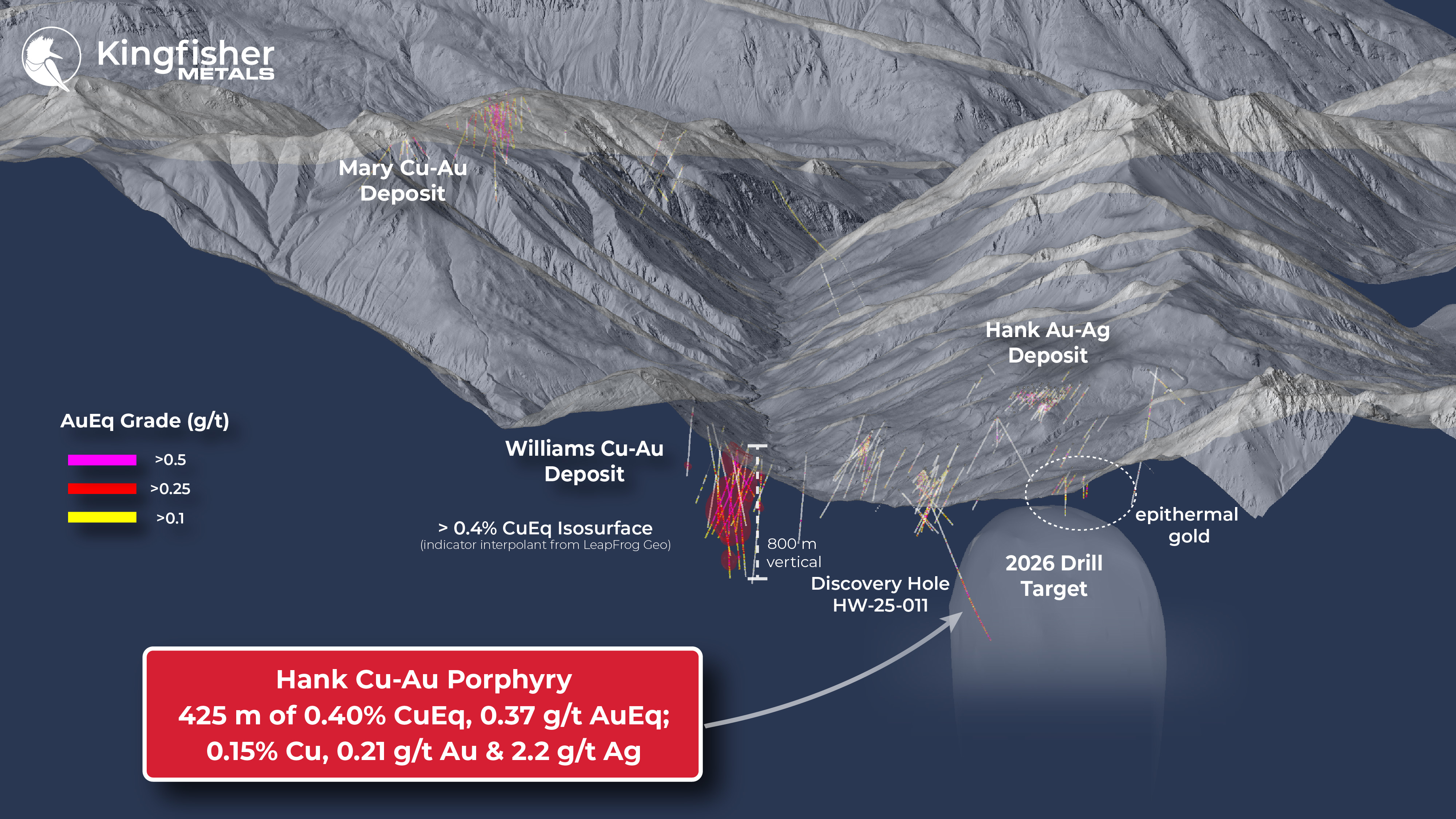
Figure 5: 3D view looking oblique to the northeast showing the location of HW-25-011 relative to the proposed "2026 target area" at Hank for future drill testing, historical drilling and location of the Williams & Mary Cu-Au Deposits as well as the Hank Epithermal Au-Ag System
HW-25-011 Summary & Discussion
Porphyry-style mineralization and alteration was identified through detailed core logging and geochemical analysis in drill hole HW-25-011, which returned 425.0 m grading 0.15% Cu, 0.21 g/t Au, and 2.2 g/t Ag (0.40% CuEq) (Figure 3). The host lithologies intersected are limited to volcanics with the exception of two, meter-scale dykes characterized by an increase in quartz veins and chalcopyrite mineralization locally.
Alteration observed in HW-25-011 is consistent with what is typically developed along the flanks of a porphyry copper-gold system. Visual observations show widespread, multi-generational porphyry-style veins and disseminated sulfide mineralization, characterized by pyrite greater than chalcopyrite throughout much of the hole. Prior to HW-25-011, historical drilling at Hank had not identified porphyry-style mineralization or zoned porphyry alteration.
Three alteration-mineralization domains are interpreted within HW-25-011. These domains are consistent with increasing proximity to a porphyry center:
0-530 m: Porphyry-distal (low temperature) alteration characterized by quartz-carbonate veins and disseminated pyrite, accompanied by elevated Pb, Zn, Ag and Au concentrations.
530-890 m: Porphyry-flanking (moderate temperature) alteration assemblage of quartz-chlorite-magnetite-pyrite hosted in volcanics. Pyrite-to-chalcopyrite ratios are high overall, with locally elevated chalcopyrite associated with higher-density quartz stockwork domains.
890-959 m: Porphyry-proximal (moderate to high temperature) alteration marked by lower pyrite-to-chalcopyrite ratios and the appearance of early K-feldspar-magnetite-chalcopyrite veins within a broad quartz-chlorite-magnetite-pyrite-chalcopyrite ± molybdenite alteration assemblage.
Across the reported interval, an increase in Cu:Au ratio downhole and toward the southeast also supports vectoring toward a higher temperature and possibly more copper-dominant porphyry core to the southeast. This same pattern and vector is also observed in the sulfide mineralogy with the visual estimates showing pyrite >> chalcopyrite transitioning to pyrite > chalcopyrite. Mineralization remains open in all directions, with the hole terminating in mineralization at 959.0 m depth.
Induced polarization (IP) survey lines completed north and south of HW-25-011 (Figure 4) indicate a broad chargeability body interpreted to represent a large sulfide system. The IP chargeability data indicates a potentially broader zone of disseminated sulfide than what is outlined within the "2026 Target Area" shape in Figures 2 - 5.
The priority 2026 target area is defined by integrated geological, geochemical, and geophysical datasets and covers approximately 1.75 km × 0.95 km (Figure 2 - 5). This represents the Company's top priority for follow-up drilling in 2026.
Other
Dustin Perry - CEO, will be presenting at the Metals Investor Forum in Vancouver, BC, tomorrow (Friday, January 23) at 3:00 pm PST. Those wishing to attend can visit metalsinvestorforum.com for registration details.
Drill core from Williams as well as the new Hank porphyry discovery (HW-25-011) will be on display for the public to view at the core shack during the AME Round Up in Vancouver, BC, on January 26 and 27.
Quality Assurance / Quality Control (QAQC)
Drilling on site at the HWY 37 Project was supervised by on-site Kingfisher personnel who implemented a full QAQC program using coarse blanks, pulp blanks, standards, and duplicates inserted into the sample stream to monitor analytical accuracy and precision. The samples were sealed on site using tamper proof seals with unique identifiers. The samples were sent to the Bureau Veritas (BV) lab in Vancouver, British Columbia. BV's quality control system complies with global certifications for Quality ISO/IEC 17025:2017 - General requirements for the competence of testing and calibration laboratories. Diamond drill core samples were analyzed using a combination of BV's MA200 process for low level concentrations (4 acid digestion/ICP-ES/MS) and MA 370 process for higher level concentrations (4 acid digestion/ICP-ES). Gold assaying was completed using FA430, a 30-gram fire assay with AAS finish. If applicable, base metal overlimits were finalized with titration, and gold overlimits completed with a gravimetric finish. Technical aspects of this news release have been reviewed, verified, and approved by Tyler Caswell, P.Geo., Vice President Exploration of Kingfisher, who is a qualified person as defined by National Instrument 43-101 - Standards of Disclosure for Minerals Projects.
Table 2. 2025 Drill Results HYW-37 Project
Hole No. | From (m) | To (m) | Interval (m)1 | Cu (%) | Au (g/t) | Ag (g/t) | CuEq (%)2 | AuEq (g/t)2 |
|---|---|---|---|---|---|---|---|---|
HW-25-001 | 249.0 | 797.1 | 548.1 | 0.14 | 0.16 | 1.8 | 0.34 | 0.31 |
incl. | 426.55 | 550.75 | 124.2 | 0.18 | 0.23 | 3.0 | 0.47 | 0.43 |
HW-25-002 | 118.0 | 124.0 | 6.0 | 0.01 | 0.48 | 1.1 | - | 0.50 |
and | 201.0 | 217.0 | 16.0 | 0.01 | 0.26 | 2.3 | - | 0.29 |
and | 233.0 | 247.0 | 14.0 | 0.02 | 0.27 | 2.0 | - | 0.32 |
and | 405.0 | 415.0 | 10.0 | 0.01 | 0.45 | 1.4 | - | 0.47 |
HW-25-003 | 101.7 | 108.0 | 6.3 | 0.01 | 0.50 | 5.0 | - | 0.56 |
and | 160.0 | 164.0 | 4.0 | 0.01 | 0.77 | 8.6 | - | 0.87 |
and | 487.5 | 488.4 | 0.9 | 0.01 | 1.68 | 33.9 | - | 2.02 |
and | 504.0 | 510.0 | 6.0 | 0.03 | 0.34 | 4.2 | - | 0.41 |
HW-25-004 | 328.1 | 885.9 | 557.8 | 0.29 | 0.30 | 1.6 | 0.64 | 0.58 |
incl. | 328.1 | 562.45 | 234.35 | 0.44 | 0.49 | 2.3 | 1.00 | 0.91 |
HW-25-005 | Hole abandoned - HW-25-006 is the redrill | |||||||
HW-25-006 | 192.0 | 433.0 | 241.0 | 0.01 | 0.28 | 0.4 | - | 0.29 |
incl. | 197.0 | 307.0 | 110.0 | 0.01 | 0.47 | |||